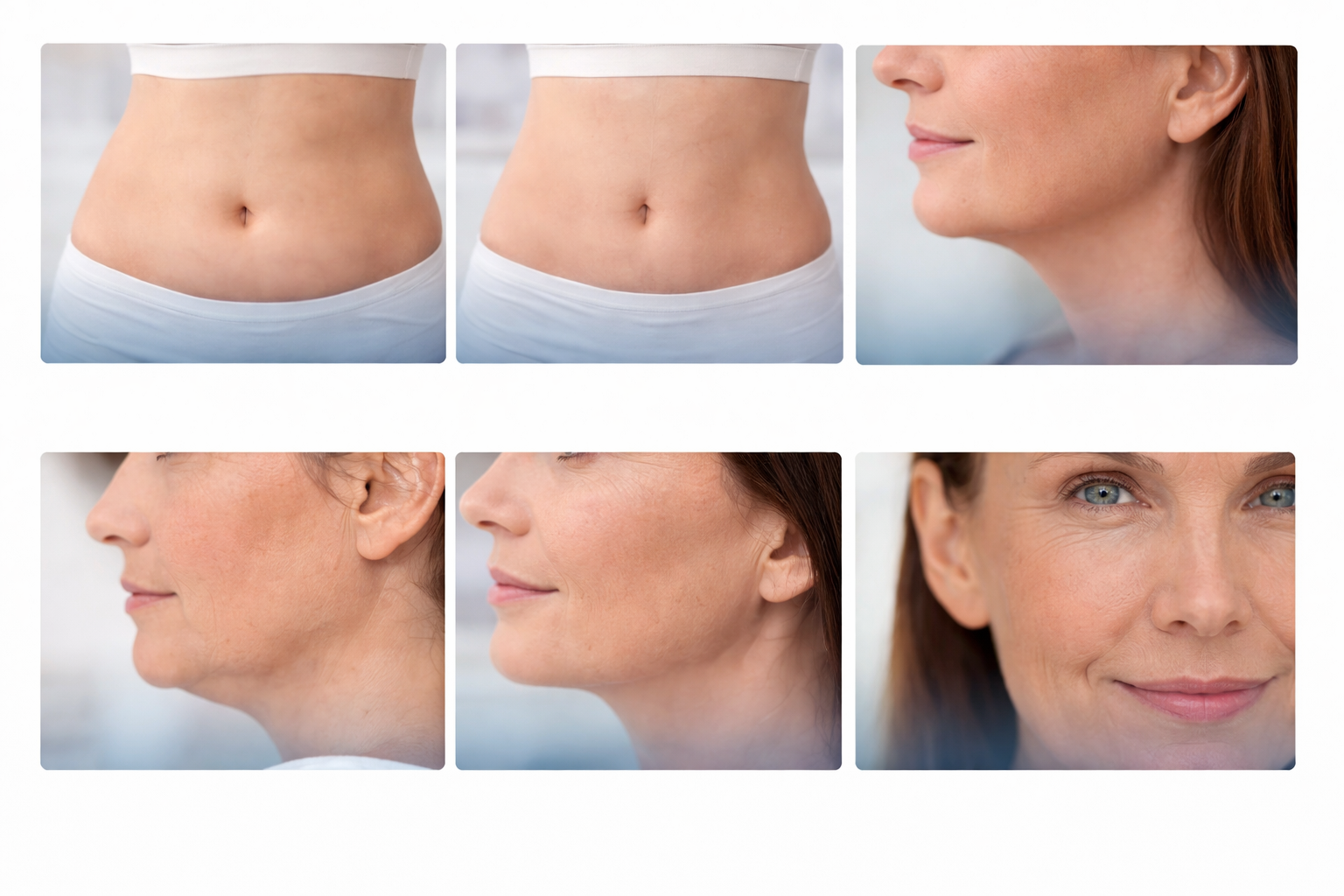
The measured, considered way
to feel at home in your body

Modern non-surgical aesthetic care built on genuine consultation, clinical precision, and an unwavering commitment to realistic, natural-looking outcomes. Every journey begins with listening.

100%
Non-Surgical
8+
Specialist Treatments
1:1
Personalised Consultations

"Aesthetic care should feel reassuring, not overwhelming — personal, not prescriptive."

Welcome

A different kind of aesthetic experience

There are countless reasons a person begins exploring non-surgical aesthetic care. For some, it is a particular area that has remained unchanged despite consistent healthy habits. For others, it is a desire for skin that feels a little firmer, a silhouette that is more balanced, or simply the return of quiet confidence when getting dressed in the morning.

What all of these reasons have in common is something deeply human: the wish to feel comfortable and at ease within one's own body. That understanding forms the entire foundation of care here.

This is not about pressure, perfection, or conforming to a narrow idea of how a person should look. It is about intentional, modern body-sculpting and aesthetic support — delivered in an approach that feels genuinely personal, professionally grounded and quietly reassuring at every step.

  • Consultation-led treatment planning with no pressure or predetermined outcomes
  • State-of-the-art, clinically selected non-surgical treatments
  • Individualised care plans tailored to each person's goals and anatomy
  • Honest, transparent communication at every stage of the process
Why It Matters

Why professional aesthetic care makes a difference

Non-surgical aesthetic treatment has evolved significantly. When delivered by experienced practitioners using appropriate technology and thorough consultation protocols, the results can be meaningful, sustainable and genuinely safe. Understanding why professional-standard care matters helps inform the right decisions.

Clinical Safety Standards

Professional-grade aesthetic care means treatments are approached with a rigorous assessment of suitability before any recommendation is made. Clinical safety is not an afterthought — it is built into every step of the process, from the initial conversation through to aftercare guidance.

Truly Personalised Assessment

No two bodies are the same, and no two concerns are identical. Generic treatment packages applied without careful individual assessment rarely produce satisfying results. A proper professional consultation ensures that any recommendation is genuinely suited to the person, not simply the most popular or convenient option available.

Technology Used Purposefully

The aesthetic industry is saturated with devices and treatment names. What distinguishes professional care is not the quantity of technologies on offer, but the deliberate, informed use of treatments that are clinically appropriate. Selecting the right tool for the right concern, at the right time, is what produces trustworthy outcomes.

Honest, Transparent Communication

A good practitioner will tell a patient when a treatment is not appropriate, when expectations need to be recalibrated, or when waiting is a better option. This kind of honesty — even when it means recommending less — is a hallmark of genuinely professional aesthetic practice.

Protecting Long-Term Wellbeing

Rushed decisions, unsuitable treatments, and unrealistic promises can all undermine long-term wellbeing — both physical and emotional. A consultation-first model protects people from these pitfalls, ensuring every decision is grounded in proper assessment and realistic expectation-setting from the very beginning.

Comfort as a Core Value

Comfort is not simply about the physical experience of treatment — though that matters greatly. It is also the emotional ease of feeling informed, respected, and unhurried. When people feel genuinely comfortable, they make clearer decisions, recover more confidently, and experience better overall outcomes.

The Process

How the treatment journey works

A thoughtful aesthetic experience does not begin with a device or a needle. It begins with understanding. The entire process is structured to ensure that every person — regardless of where they are in their journey — feels informed, considered, and in full control of their decisions.

01

Initial Consultation

The journey begins with a thorough, unhurried conversation. This is an opportunity to share concerns openly, ask questions freely, and understand what might — and might not — be suitable. There is no pressure and no predetermined outcome. The consultation exists entirely to listen and understand.

02

Personalised Assessment

Based on the consultation, a careful assessment is made of the concern, the anatomy involved, and the goals at hand. No two people arrive with the same starting point, and the assessment reflects that. Treatment is never recommended before suitability has been clearly established.

03

Tailored Treatment Plan

Where treatment is appropriate, a plan is developed around the individual — their goals, their anatomy, their lifestyle, and their comfort level. This might involve a single treatment, a combination approach, or in some cases, a measured recommendation to wait. Honesty is always a part of the process.

04

Ongoing Support

Care does not end when a treatment session concludes. Guidance on what to expect, how to manage any sensations, and how to maintain results over time is an integral part of the service. Patients are supported throughout — before, during and after every stage of their journey.

Suitability

Who is suitable

Non-surgical aesthetic treatments are appropriate for a broad range of individuals, but they are not universally suited to everyone. Understanding the typical profile of a suitable candidate — and the factors that require careful consideration — is an important part of making an informed decision.

Who typically benefits
  • Adults in generally good health who have localised concerns that have not responded to lifestyle changes alone
  • Those seeking gradual, natural-looking refinement rather than dramatic or surgical transformation
  • Individuals who prefer minimal recovery time and wish to maintain normal daily activity as much as possible
  • People with realistic expectations who understand that non-surgical results develop over time
  • Those who have considered their options carefully and want professional guidance on the most appropriate path forward
  • Anyone dealing with intimate or personal concerns — such as changes following childbirth or the natural ageing process — who wants to explore non-surgical support in a discreet, respectful setting
  • People with benign skin lesions or texture concerns that affect their confidence or daily comfort
  • Individuals experiencing mild to moderate skin laxity who want to improve firmness without surgical intervention

Important considerations

Non-surgical aesthetic care is not appropriate for every individual or every concern. Certain medical conditions, medications, or personal circumstances may affect suitability for specific treatments. This is precisely why thorough consultation is the foundation of every treatment journey.

During the consultation process, relevant health history is carefully reviewed and any potential contraindications are discussed openly. There is never an obligation to proceed, and a recommendation to avoid or delay treatment is always given with the person's long-term wellbeing in mind.

Some concerns are better addressed through other clinical or surgical pathways — and where that is the case, that assessment is communicated honestly and respectfully. The priority is always the individual's best interest, not the completion of a treatment.

Areas of Concern

Types of conditions and concerns explained

People come to non-surgical aesthetic care from many different starting points. Some have a single specific concern; others are navigating a combination of issues they have found difficult to articulate. Understanding the most common types of concerns — and how they are approached — can help individuals feel more confident before their first consultation.

Body

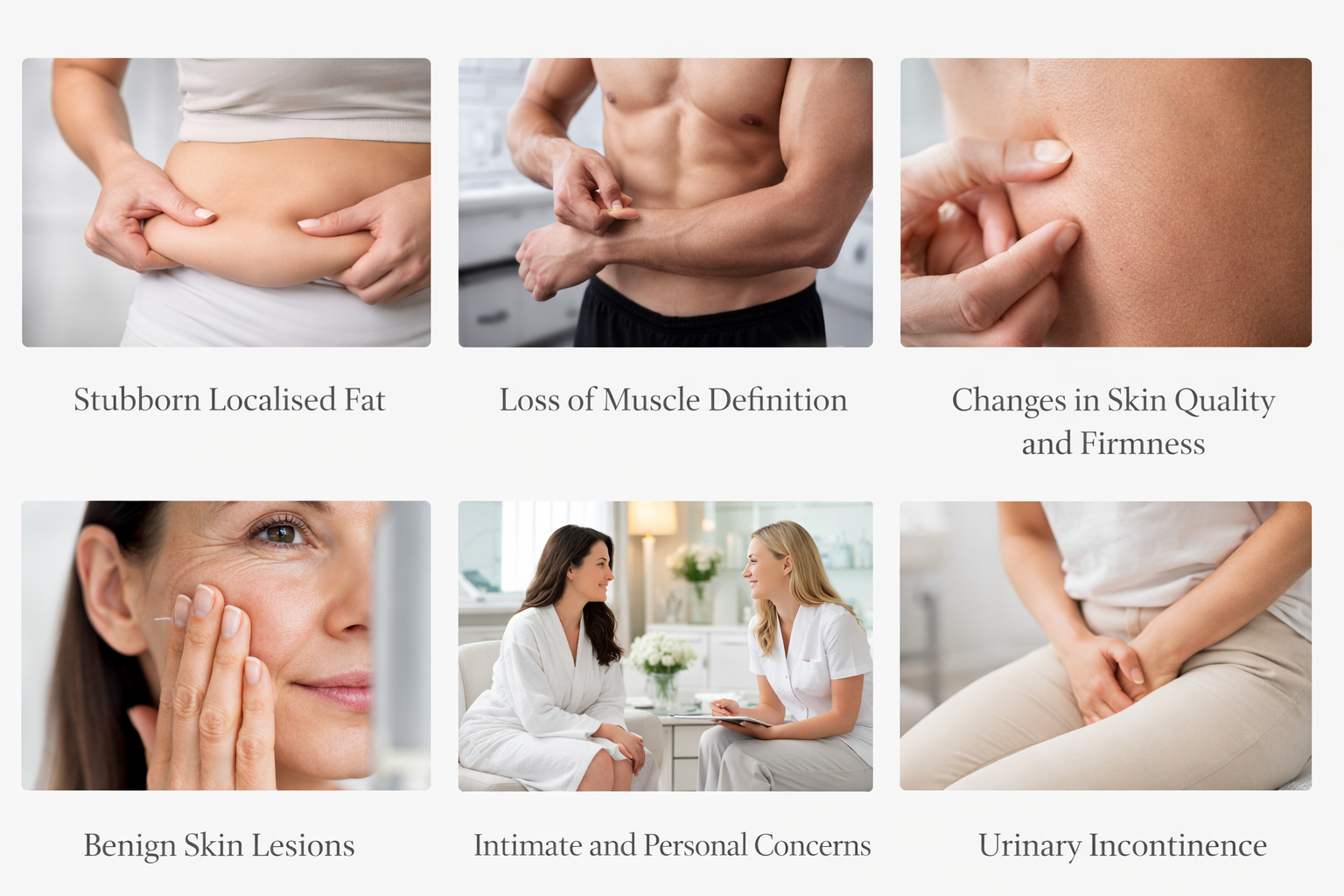
Stubborn Localised Fat

Many people who exercise regularly and eat well still find that certain areas of the body hold onto fat deposits that do not respond to lifestyle changes. This is not a reflection of fitness level or discipline — it is often simply a matter of physiology. These localised pockets may affect the abdomen, flanks, inner thighs, chin or jawline area, and can create a sense of imbalance in the overall silhouette that clothing alone cannot resolve.

Body

Loss of Muscle Definition

Individuals who are physically active may still find that certain areas appear less defined than they would like, despite consistent effort. This is a common experience and does not indicate any failing of training or lifestyle. Non-surgical approaches to improving visible muscle tone and definition can complement a person's existing routine in a targeted, measured way.

Skin

Changes in Skin Quality and Firmness

Skin texture, firmness and overall quality naturally change over time. Sun exposure, hormonal changes, the natural ageing process and other factors can contribute to reduced skin tone, fine irregularities in texture or areas that feel less firm than they once did. These are common, widely experienced concerns that a range of non-surgical treatments are specifically designed to address in a controlled and progressive manner.

Skin

Benign Skin Lesions

Small benign lesions — such as skin tags, thread veins or other minor growths — can attract disproportionate amounts of attention in the mirror or cause discomfort with clothing. Even concerns that might appear insignificant to others can meaningfully affect how a person feels day to day. These matters are always taken seriously, regardless of their size or apparent clinical significance.

Intimate

Intimate and Personal Concerns

Some concerns are deeply personal and have historically been difficult for individuals to raise in clinical settings. Changes in the intimate area following childbirth, hormonal shifts or the natural ageing process are real, valid concerns that deserve respectful, informed professional attention. These matters are handled with the utmost discretion, sensitivity and clinical care — in an environment designed specifically to support open, comfortable conversation.

Functional

Urinary Incontinence

Stress incontinence and related concerns are significantly more common than many people realise — and far more people experience these issues in silence than choose to seek support. This is a legitimate functional concern with real impact on daily confidence, social ease and overall wellbeing. Non-surgical treatment options exist and are discussed with the same respect, privacy and clinical rigour as any other area of aesthetic care.

Treatment Options

Treatment options and what to expect

A carefully curated selection of clinically supported, non-surgical treatments is available — each chosen for its ability to address specific concerns safely and effectively. Treatments are always recommended on the basis of individual suitability, never offered as blanket solutions.

Cryolipolysis
Targeted fat reduction through controlled cooling

Cryolipolysis uses controlled cooling to target and reduce stubborn localised fat deposits in specific areas of the body. The technology works by applying a precise temperature to a defined zone, which initiates a natural process by which treated fat cells are gradually eliminated by the body over time.

It is a non-invasive procedure — no surgery, no needles, and no significant recovery period is required. It is well-suited to individuals who have specific areas of concern that have proven resistant to diet and exercise alone, and who are seeking a measured, non-aggressive approach to improving their silhouette. Common areas of application include the abdomen, flanks, thighs and beneath the chin.

Suitability is always assessed individually. Cryolipolysis is not a weight-loss treatment and is not intended for individuals seeking generalised fat reduction across the body. It works best as part of a thoughtful contouring plan, developed with a clear understanding of what the person wishes to achieve and what realistic outcomes look like for their specific anatomy.

ToneSculpt works by stimulating muscle contractions in targeted regions to enhance the appearance of tone and definition in those areas. It is designed for individuals who want to see improved definition in specific zones and prefer a non-surgical, non-invasive approach.

The treatment is appropriate for people seeking a more sculpted appearance without the recovery associated with surgical intervention. It is often considered as a complement to an active lifestyle — not a replacement for it — and is most effective when tailored to a person's existing physique and realistic goals.

As with all treatments, ToneSculpt is positioned within a wider consultation-led plan rather than recommended in isolation. The most appropriate approach depends on the individual's anatomy, concerns and overall aesthetic objectives.

HIFU — High-Intensity Focused Ultrasound — has become an established non-surgical option for individuals seeking skin tightening and a more lifted appearance without surgical intervention. The technology delivers precise ultrasound energy to deeper layers of tissue beneath the skin surface, stimulating the body's natural regenerative response and the gradual production of new collagen.

Results develop progressively over time, which aligns with the preference many people have for change that feels natural and unhurried. HIFU is particularly suited to those with mild to moderate laxity concerns and can be considered for the face, neck, jawline, chin and décolletage area, depending on individual suitability.

One of the more practical advantages of HIFU is its compatibility with a busy schedule — treatment sessions do not typically require extended downtime, making it an accessible option for those who cannot accommodate prolonged recovery periods.

Morpheus8 combines microneedling with radiofrequency energy to improve skin quality, texture and firmness in a targeted, controlled manner. The treatment works beneath the surface of the skin, which makes it well-suited to individuals seeking improvement in texture, fine irregularities or areas of slight laxity — without the need for surgical procedures.

The combination of technologies allows for a degree of precision and customisation that is appreciated by individuals who want results tailored to their specific skin concerns rather than a generalised approach. It can be applied to a range of body areas in addition to the face, depending on the concern being addressed.

Morpheus8 is best understood not as a standalone fix, but as one component of a considered skin quality plan. Its effectiveness is maximised when it is recommended in response to a clearly identified concern, rather than as a default or trend-driven option.

Fat-dissolving injections are appropriate for select situations where small, localised deposits of fat are the primary concern — often in areas such as beneath the chin, along the jawline, or in small regions elsewhere on the body. They are best understood as a precise refinement tool rather than a broad-based body contouring treatment.

These injections can be of particular interest to individuals who have already made lifestyle changes but find that a specific targeted area remains resistant. The treatment is described clearly and honestly — including what it can achieve and what falls outside its scope — so that the decision to proceed is always made with full information.

As always, suitability is carefully assessed before any recommendation is made. Fat-dissolving injections are not appropriate in all situations, and responsible prescribing practice means that the conversation about fit is as important as the treatment itself.

CryoPen treatment delivers a targeted cryotherapy intervention for the removal of benign skin lesions. Using controlled cold application to the precise site of the lesion, the treatment is designed to address the concern with minimal disruption to the surrounding skin.

Even small lesions can have a disproportionate effect on how a person feels — catching the eye in the mirror, creating irritation with clothing or simply becoming something that occupies more mental space than it ought to. These concerns are taken seriously, regardless of their clinical size or complexity.

Not every lesion is suitable for this approach, and proper assessment is essential before treatment proceeds. The initial consultation includes a review of the lesion to confirm that CryoPen is the appropriate and safe option for the specific concern.

Non-surgical vaginal tightening is available for women who wish to address changes in the intimate area — whether as a result of childbirth, hormonal changes associated with the menopause, or the natural progression of time. These are real, valid concerns and they deserve the same level of clinical care, respect and discretion as any other aesthetic matter.

The consultation process for this treatment is specifically structured to be calm, private and completely free from pressure. There is full understanding that intimate concerns can be among the most difficult to raise with a healthcare professional — and the environment is designed to support that conversation without any sense of awkwardness or urgency.

Suitability is assessed carefully, and realistic expectations are always established before any decision is made to proceed. The aim is not to make promises, but to explore whether a minimally invasive approach might offer meaningful benefit in a medically appropriate and personally comfortable way.

Urinary incontinence — including stress incontinence that may be triggered by everyday activities such as laughing, coughing or physical exertion — affects a significant number of people who often manage the concern in silence for extended periods before seeking support. That delay is entirely understandable; it is a deeply personal matter that has long carried an unwarranted sense of embarrassment.

Non-surgical treatment options exist for appropriate candidates and are discussed in a setting that prioritises discretion, compassion and clear information. The consultation process is structured to be entirely non-judgmental, with full recognition that every individual's experience is different.

Suitability varies considerably from person to person, and the consultation process is a vital first step in determining whether a non-surgical approach is likely to provide meaningful benefit. The goal is always to help the individual understand their options clearly, and to support whatever decision feels most appropriate for their circumstances.

Expected Outcomes

Realistic results and honest expectations

One of the most important aspects of responsible aesthetic care is the careful management of expectations. Non-surgical treatments produce results that are typically gradual, progressive and nuanced — and that is not a limitation. For many people, it is precisely what they are looking for.

The goal is never dramatic transformation. It is subtle, natural-looking improvement that makes a person feel more comfortable and more confident — in clothing, in social situations, and in their own private sense of self. Results that look as though nothing was done, but feel like everything has changed.

Results develop over time

Most non-surgical treatments produce results that emerge progressively over weeks or months. This gradual development is a feature, not a flaw — it reflects the way the body naturally responds to treatment and allows changes to appear seamlessly.

Personal, not universal

How the body responds to treatment varies from person to person. Results that are realistic for one individual may differ from those experienced by another, even with the same treatment in the same area. Individual response is always taken into account during planning.

Maintenance matters

Results from non-surgical treatments can be long-lasting, but they are not necessarily permanent. Lifestyle factors, the natural ageing process, and individual biology all play a role. Honest guidance on what to expect long-term — and how to support and maintain results — is a standard part of the care provided.

What meaningful improvement actually looks like

  • Clothing that fits more comfortably across previously frustrating areas
  • A silhouette that feels more balanced and proportionate overall
  • Skin that looks a little smoother, firmer or more even in texture
  • Reduced preoccupation with a specific area that previously drew unwanted attention
  • Improved confidence when getting dressed, in social situations, or in intimate settings
  • A quietly enhanced sense of ease and self-assurance day to day
  • Results that feel natural — as though the improvement was always there
Clinical Standards

Safety and professional standards

In non-surgical aesthetics, safety is not simply a matter of using the right technology. It is the product of rigorous assessment processes, honest communication, experienced clinical judgement, and a genuine commitment to the long-term wellbeing of every individual in care.

Pre-Treatment Assessment

Every treatment recommendation is preceded by a thorough assessment of suitability. Medical history, current medications, relevant lifestyle factors and the specific nature of the concern are all considered before any plan is developed. Recommendations are only made where suitability has been clearly established.

Informed Consent

Individuals always have the right to fully understand the treatment being proposed before making any decision. This means clear explanation of how the treatment works, what the experience is likely to involve, what the realistic range of outcomes looks like, and any considerations or limitations relevant to their specific case. No treatment proceeds without genuine informed consent.

Technology Selection

Treatments are selected for their clinical track record, safety profile and appropriateness for the concerns being addressed — not for novelty or commercial popularity. The range of technologies in use reflects a deliberate commitment to quality over quantity, with each option chosen because it reliably provides meaningful benefit for suitable candidates.

Post-Treatment Monitoring

The care provided does not end when a treatment session concludes. Appropriate aftercare guidance is always included as a standard component of the service, and individuals are supported in understanding what to expect during the recovery and results period. Any concerns arising after treatment are taken seriously and addressed promptly.

Aftercare

Aftercare and maintaining results

Good aftercare is not an optional extra — it is a fundamental part of ensuring that treatments deliver the best possible outcomes and that individuals feel supported throughout the entire process. The guidance provided is always tailored to the specific treatment undertaken and the individual's circumstances.

Immediately After Treatment

  • Follow any specific post-treatment instructions provided at the appointment
  • Avoid excessive heat, vigorous physical activity, or direct sun exposure in the treated area for the recommended period
  • Stay well hydrated to support the body's natural processes
  • Avoid applying products to the treated area unless specifically advised otherwise
  • Allow the body time to begin its natural response — do not assess results prematurely
  • Contact the clinic promptly if any unexpected sensations or reactions occur

In the Weeks Following

  • Continue to maintain a broadly healthy lifestyle to support the treatment process
  • Protect treated skin from prolonged UV exposure and use appropriate SPF
  • Attend any follow-up appointments as advised to monitor progress and outcomes
  • Be patient with results — gradual improvement is normal and expected for most non-surgical treatments
  • Raise any questions or concerns during follow-up rather than seeking reassurance elsewhere
  • Report any significant changes in the treated area that differ from the expected recovery pattern

Long-Term Maintenance

  • Understand that non-surgical results are influenced by ongoing lifestyle and the natural ageing process
  • Discuss the potential benefit of maintenance sessions where relevant to the treatment undertaken
  • Maintain a healthy relationship with the results — enhancement should support confidence, not create dependency
  • Return for reassessment if new concerns arise or if existing concerns change in nature over time
  • Consider the full picture of skin health and general wellness as complementary to aesthetic treatment outcomes
FAQs

Frequently asked questions

These are some of the questions most frequently raised before, during and after the consultation process. If a specific question is not addressed here, it will always be welcomed during an individual consultation.

What treatments are available, and how do I know which is right for me?
A range of non-surgical treatments is available, including cryolipolysis for localised fat reduction, ToneSculpt for muscle tone and definition, HIFU for skin lifting and firming, Morpheus8 for skin quality and texture, fat-dissolving injections for targeted refinement, CryoPen for benign lesion removal, and specialist treatments for vaginal tightening and incontinence. Which treatment is most appropriate depends entirely on the individual's specific concern, anatomy, and goals — which is precisely why consultation is the essential first step. No recommendation is made without a full, individualised assessment.
No. All treatments available are non-surgical. The emphasis throughout is on procedures that can improve the way the body looks and feels without requiring any surgical incision, anaesthesia, or significant recovery period. Each treatment has its own profile in terms of what to expect during and after the session, which is always explained clearly before any decision is made.
No — and that honesty is deliberate. Not every treatment is appropriate for every individual, and not every concern is best addressed through non-surgical aesthetic care. The consultation process is specifically designed to establish suitability before any recommendation is made. Where a treatment is not appropriate, that assessment is communicated clearly and without pressure, along with any relevant alternatives or alternative paths worth considering.
Individual experiences vary depending on the treatment and the person. Comfort is a priority throughout, and what each treatment typically involves in terms of sensation is always explained clearly in advance. This is an important topic to raise during the consultation — any concerns about comfort or sensation should be discussed openly so that expectations are accurate and the experience is as manageable as possible.
This varies significantly depending on the treatment selected and how an individual's body responds. Some treatments produce visible changes relatively quickly; others work progressively over several weeks or months as the body processes the effects of treatment. Expected timelines are always discussed honestly at consultation — the aim is to ensure that expectations are realistic and that no one is left wondering whether what they are experiencing is normal.
In some cases, yes. Where multiple concerns exist or where a combination approach is likely to produce a better outcome than a single treatment alone, this is considered during the consultation and planning process. However, combination treatments are only recommended where they make genuine sense for the individual — not as a way of maximising the number of sessions. Every recommendation is grounded in what is actually most appropriate for the person.
Not at all — this is actually a very common position. Many people arrive at a consultation knowing only that something feels off, without any clear sense of what treatment might help. The consultation process is specifically designed for this. It provides the space to talk through what is concerning someone, understand what might be possible, and arrive at a clear sense of direction — without any expectation that the person arrives with pre-formed ideas about what they want.
Intimate concerns — including those related to vaginal tightening or incontinence — are treated with the highest level of discretion, respect and sensitivity. The consultation environment for these matters is private and calm, and there is full understanding that raising such concerns requires trust. No one is made to feel awkward, rushed or judged. These are genuine clinical concerns that deserve the same careful, professional attention as any other area of aesthetic care.
That is the consistent aim. The approach throughout is oriented towards subtle, harmonious improvement rather than dramatic or artificially obvious change. The goal is for people to feel more comfortable and more confident — and for those results to look entirely proportionate and authentic. Realistic expectations are always established clearly, so that individuals understand the kind of improvement that is genuinely achievable for their specific concern.
Patient Experiences

How people describe their experience

The measure of any aesthetic care provider is ultimately found in how individuals feel throughout their experience — from the first conversation to the last follow-up. These reflections represent the kinds of experiences that individuals most commonly describe.

I had been thinking about doing something about my chin area for years but always felt nervous about taking the first step. The consultation was genuinely relaxed — no hard sell, just a real conversation about what might help. I left feeling informed rather than pressured, and that made all the difference.

L.M.
Cryolipolysis & Fat-Dissolving

What I appreciated most was the honesty. I went in expecting to be recommended several treatments, and instead had a very measured conversation about what would and wouldn't suit me. That kind of integrity is rare, and it made me trust the whole process far more.

S.A.
HIFU & Morpheus8

I was anxious about raising something quite personal and wasn't sure how it would be received. From the moment the conversation started, I felt completely at ease. The discretion and sensitivity shown throughout was exactly what I needed — I only wish I had sought help sooner.

R.T.
Intimate Wellness Treatment
Our Approach

The approach to patient care

What makes the care experience here different is not simply the technology available — it is the philosophy that underpins every decision, every recommendation, and every interaction. This is a practice built on the conviction that the best aesthetic outcomes begin with the best clinical and human care.

Aesthetic care, at its best, is an exercise in listening. Not to present ready-made solutions, but to genuinely understand what a person is experiencing — what is troubling them, what they have already tried, what they hope for, and what they are uncertain about. That understanding is the foundation on which everything else is built.

The approach here is consultation-led. This means that no treatment is discussed, recommended or offered until a proper conversation has taken place and a thorough, individual assessment has been made. The consultation is not a formality; it is the most important part of the entire process.

Technology is important, but it is always in service of the person — not the other way around. The skill lies not in owning the latest device, but in knowing when, how and for whom each treatment is genuinely appropriate. That clinical judgement is the real differentiator between average aesthetic care and excellent care.

Premium care does not have to feel cold or clinical. It should feel warm, unhurried and genuinely supportive — a space where individuals can speak candidly, ask anything, and leave feeling confident in whatever decision they make. That balance is what this practice strives to embody in every interaction.

Listening before recommending

Every consultation begins with genuine, attentive listening — not a checklist or a predetermined treatment pathway. Understanding what matters most to the individual comes first.

Clinically grounded decisions

Every recommendation is based on clinical suitability, realistic expectation-setting, and honest assessment of what a treatment can genuinely achieve for the individual.

Respectful of every concern

No concern is too small, too personal, or too unusual to be addressed with the same level of professional care and human sensitivity. Every individual matters equally.

Honest, even when it means less

Recommending fewer treatments, suggesting a different approach, or advising someone to wait is not a failure — it is a sign of genuine integrity. That honesty is fundamental here.

Next Steps

Next steps and what to know

If you are considering non-surgical aesthetic care — whether you have a clear idea of what you are looking for or simply a vague sense that something is not as you would like — the most valuable first step is the same: a proper conversation.

1

Start with a consultation

There is no obligation and no pressure. The consultation exists to give you space to share your concerns, ask questions, and understand what may — and may not — be possible for your specific situation.

2

Be open about your concerns

The more candid the conversation, the more useful the guidance. There is no such thing as a concern too small or too personal to discuss. Everything is approached with respect and without judgement.

3

Ask as many questions as you need

Feeling fully informed is not a luxury — it is a prerequisite for making a decision that feels right. No question is too basic, and no question is unwelcome at any stage of the process.

4

Take the time you need

There is never any pressure to decide during a consultation. It is perfectly acceptable — and often advisable — to take time to reflect before committing to any treatment plan. The right decision is always one that feels considered and comfortable.

What to bring to your first consultation

  • A clear description of the concern or concerns you would like to discuss — even if you are unsure how to articulate it, the conversation will help
  • Any relevant medical history, current medications, or known skin sensitivities that may affect suitability
  • An honest sense of what you hope to achieve — and how dramatic or subtle a change you are looking for
  • Any previous aesthetic treatments you have had, including their outcomes and whether any complications arose
  • Questions — as many as you have, however basic they may seem
  • An open mind: sometimes the best option turns out to be something different from what you initially expected

A considered, balanced place
to begin

Choosing aesthetic treatment is personal. For some, it is a practical step. For others, it carries real emotional weight. For many, it is a blend of both. What matters — above everything else — is that the decision feels right for you, and that the care you receive feels reliable, respectful and well-grounded.

Whether the concern is stubborn localised fat, skin quality, muscle definition, lesion removal, intimate wellness, or simply a quiet wish to feel a little more comfortable in your own skin — this is a thoughtful, measured place to start. Each consultation is an opportunity to have an honest conversation, understand what may realistically be possible, and determine whether non-surgical aesthetic care is the right path for you at this point in time.

There is no need to overcomplicate it, and no reason to feel pressured. Sometimes the most meaningful change comes from a calm, unhurried conversation — followed by a plan that was built specifically for you.

That is the standard of care that this practice is committed to upholding.